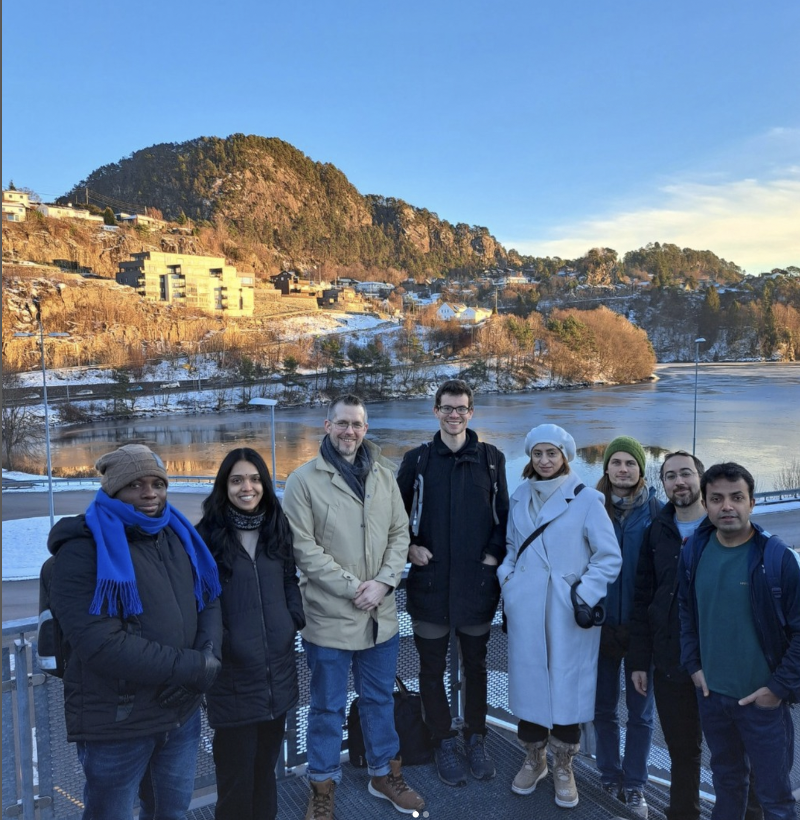
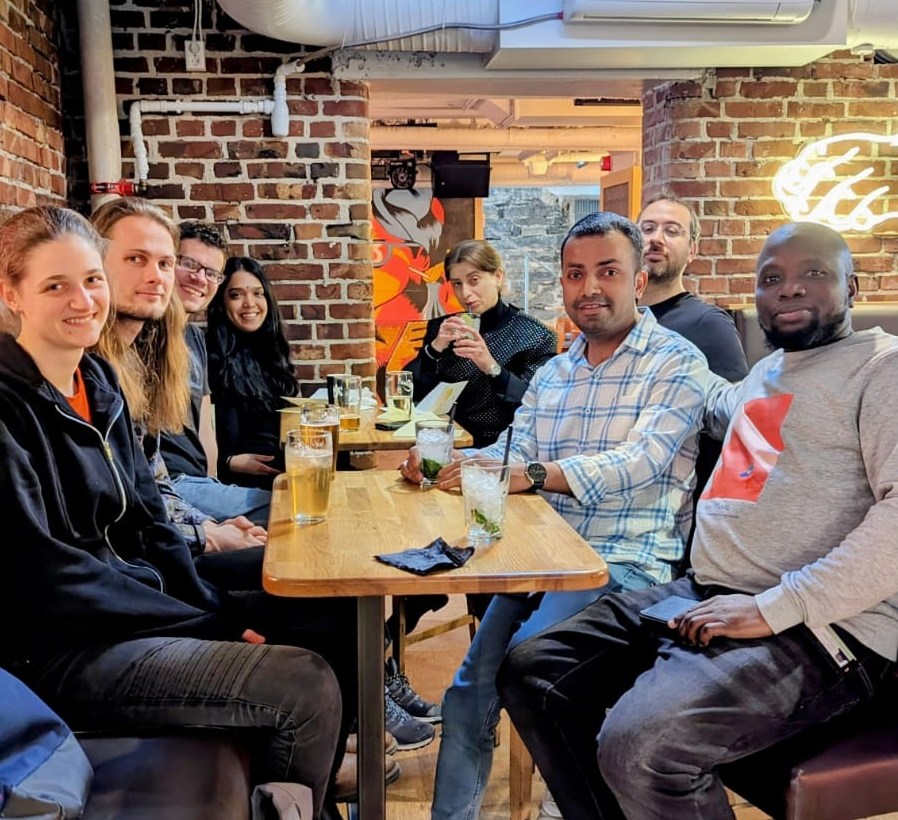
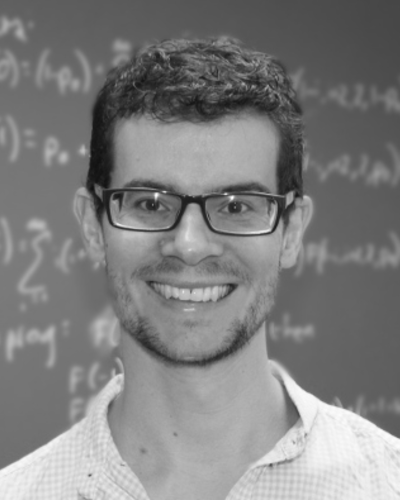
Iain Johnston is a Professor in the Faculty of Science and Technology at the University of Bergen. His undergraduate was in Natural Sciences at Cambridge and his doctorate was in Theoretical Physics at Oxford with Ard Louis. He did a postdoc with Nick Jones at Oxford, focussing on how mitochondria vary within and between cells. He then moved to the Department of Mathematics at Imperial College London to take up an independent MRC research fellowship, studying the role that physical and genetic variability in mitochondria play in human disease and plant bioenergetics. He then took a Birmingham Fellowship in the University of Birmingham School of Biosciences to develop laboratory and fieldwork approaches to study plant organelles in parallel with a Turing Fellowship from the Alan Turing Institute, before moving to sunny Bergen.
Kazeem Dauda is a postdoctoral fellow in the research group HyperEvol: Combatting Antimicrobial Resistance (AMR) funded by Trond Mohn Stiftelse (TMS) in connection with Centre for Antimicrobial Resistance (CAMRIA). He is working on genetic features of gram-negative bacteria (particularly Klebsiella pneumoniae and Escherichia coli) that are linked to the propensity of Extended Spectrum BetaLactamase (ESBL) production. Clusters of genes features will be identified and fed through into hypercubic inference to learn and predict pathways by which AMR evolves in different regions and countries. Kazeem is also interested in advanced statistical learning, data science, and machine learning (supervised, unsupervised and semi-supervised learning). Papers with the group include EvAM and AMR, mBio 2025; Continuous-time accumulation, PLoS CB 2024; Mito-plastid evolution, MBE 2024.
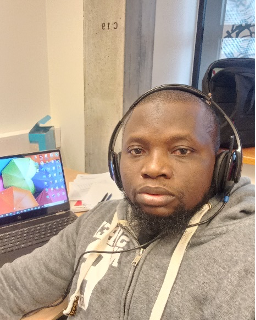
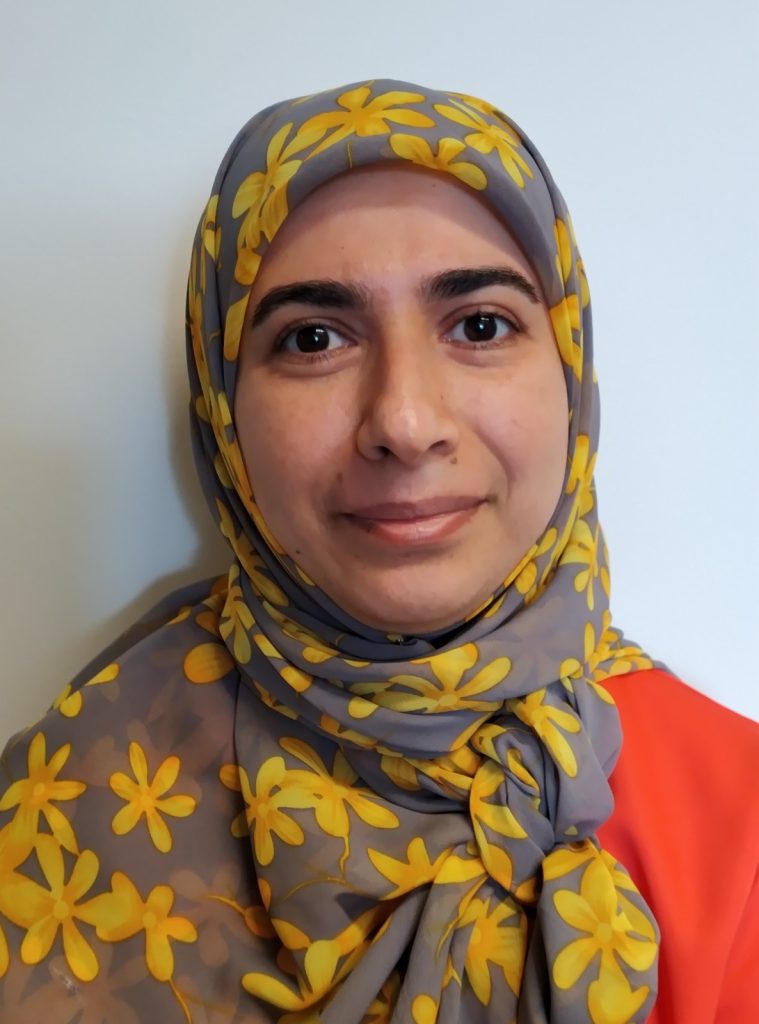
Leila Barmoudeh is a UiB postdoctoral researcher associated with the group, with research expertise in advanced regression modeling, spatial and spatio-temporal statistics, machine learning and neural networks. Her work bridges statistical theory to real-world application, particularly in healthcare analytics. Currently, she is building a cancer-contextualized signaling map from matched tumor/normal phosphoproteomic, proteomic, and transcriptomic data in liver cancer (HCC). The goal of her work is to uncover hidden signaling relationships and propose novel kinase targets for liver cancer. In addition, she has extensive experience in data analysis and is currently supervising one master’s student and one PhD internship student. See her portfolio (research and projects) here.
Robert Glastad is a PhD student funded by the University of Bergen. He is combining metabolic and stochastic modelling to explore the interplay between physical, genetic, and metabolic dynamics in the mitochondrial populations of cells. Papers with the group include MRO evolution, J Evol Biol 2025; Mito networks and inheritance, PLoS CB 2023; Avoiding oDNA meltdown, PLoS Biol 2021.

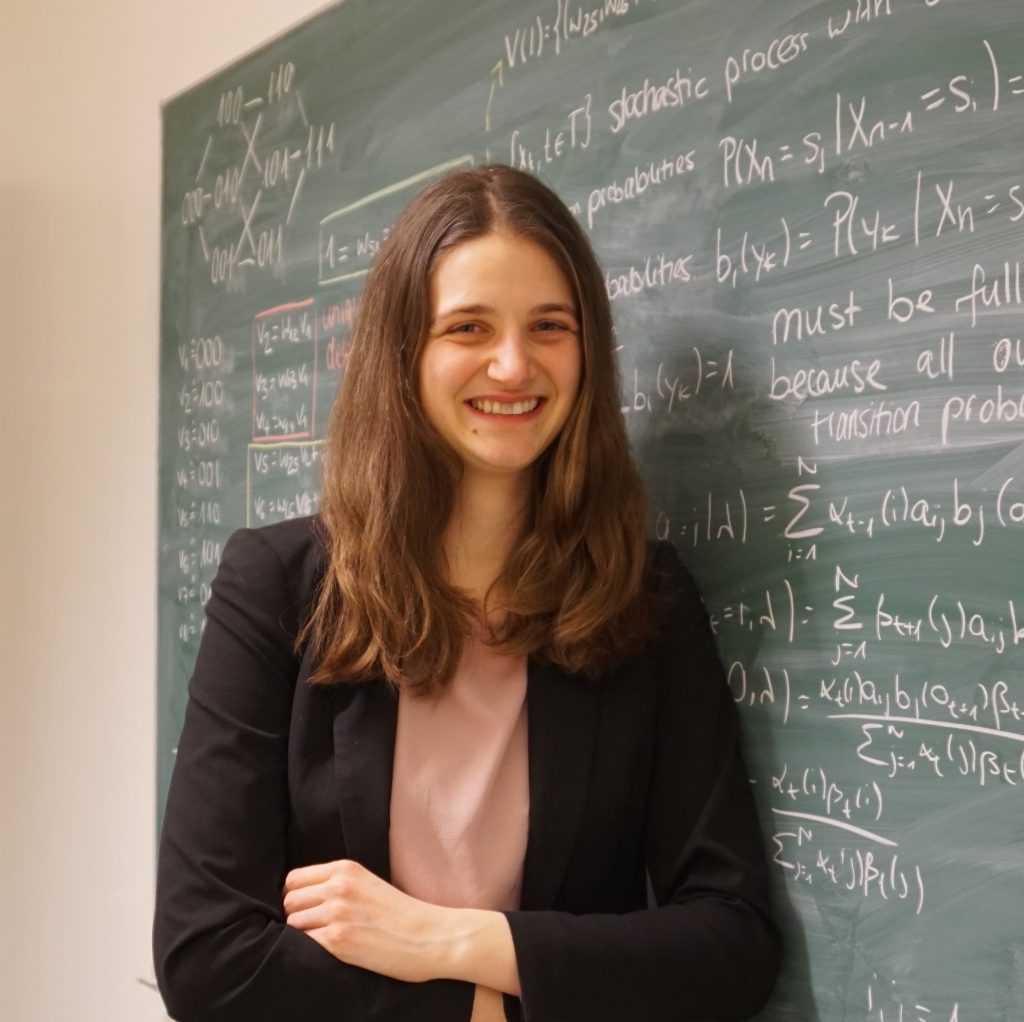
Jessica Renz is a PhD student in the CAMRIA HyperEvol project. After completing her BSc and MSc in Mathematics at the University of Stuttgart, as well as a degree in biology as part of a teaching programme, she is working now with hypercubic models to learn and predict the evolutionary pathways of antimicrobial resistance. In her research she is interested in understanding those evolutionary processes with the help of models both from a statistical point of view, but also with the help of pure mathematics like algebra and geometry. Papers with the group include EvAM and AMR, mBio 2025. Her webpage is here.
Olav Aga is a medical student investigating how bacteria acquire multidrug resistance. His current focus is inherent evolutionary mechanisms in Klebsiella pneumoniae. He is interested in how methods developed in the research group can be applied in the clinic. Olav is developing an R-library enabling clinicians to use hypercubic inference tools. Before studying medicine, Olav completed a bachelor’s degree in informatics at the University of Oslo. He is enrolled in the Medical Student Research Programme at UiB and is working on research with us in parallel. Papers with the group include EvAM and AMR, mBio 2025; Continuous-time accumulation, PLoS CB 2024.

Alumni
In addition to the folks below, many gifted Masters students have also worked with the group before its current incarnation, including projects that received the Tessella prize for research software, and those which led to publications on network evolution, mitochondrial dynamics, and DNA self-assembly.
Rajneesh Kumar was a PhD student funded by UiB. He used models and simulation to explore how ATP variability arises within and between cells, and the consequences of this behaviour for cell biology, population dynamics, and the evolution of co-operation and competition. Papers with the group include ATP gradients in cells, Biophys J 2025. He went on to a postdoc at the University of Sussex.
Belén García Pascual was a PhD student funded by the ERC through EvoConBiO. She worked with mathematical models to explain gene retention by organelles throughout evolutionary history, together with multi-scale biological systems; also using ideas from topological data analysis to understand evolutionary inference. Papers with the group include Environments and oDNA, Proceedings B 2023. She went on to a postdoc at KTH Stockholm. Her webpage is here.
Fábio Dias Correia de Oliveira was an MSc student, working for his thesis on understanding and predicting the dynamics of Norwegian power markets. He completed his MSc in parallel with working at Eviny, and continued there.
Maria Johansen was a researcher funded by the ERC through EvoConBiO, exploring how organelle genomes have evolved over time, and how modern-day cells control these populations to survive. Her background is cancer research and evolutionary cell biosciences from university of Oslo. Papers with the group include MtDNA gene evolution, Biochem J 2024. She went on to work with as a senior research adviser at UiB.
Shibani Veeraragavan was a postdoctoral researcher funded by the EvoConBio project. She worked on exploring the evolution of mitochondrial DNA populations in cells and the way in which cells optimize the processes involved. Papers with the group include MtDNA gene evolution, Biochem J 2024. She went on to work with SciLife Lab in Sweden.
Kostas Giannakis was a postdoc funded by the ERC through EvoConBiO, exploring the links between organismal lifestyle and organelle genome structure, the ongoing games played between organelles and their host cells, and theoretical (but useful!) questions related to processes on graphs and networks. Papers with the group include Mito-plastid evolution, MBE 2024; Ecology shaping oDNA, Syst Biol 2024; Universal organelle evolution, Cell Sys 2022; Avoiding oDNA meltdown, PLoS Biol 2021. He went on to work with the Norwegian Public Health Institute and then faculty at the Ionian University. His website is here.
Arunas Radzvilavicius joined us as a Visiting Fellow to explore the evolutionary effects of mitochondrial diversity and genome integrity across multiple biological scales. He studies fundamental processes that generate and regulate mitochondrial diversity within cells, organisms and populations — working towards developing a theory of eukaryotic sex evolution based on the interplay between mitochondrial and nuclear genes. Papers with the group include Avoiding oDNA meltdown, PLoS Biol 2021. He went on to work with Nature Human Behaviour.
Sam Greenbury was a postdoctoral researcher affiliated with the EPSRC Centre for the Mathematics of Precision Healthcare at Imperial College. He went on to continue postdoc work at Imperial College. Sam’s papers with the group (including prior to its current incarnation) include: Evolvability, robustness, and network topology (JTB 2010); Modelling quaternary structure (Interface 2014); Malaria risk and progression pathways (npj Digital Medicine 2019). he went on to further postdoctoral work at Imperial.
Joanna Chustecki was a PhD student funded by the BBSRC MIBTP scheme, working on the dynamics of mitochondria in plant cells. She used confocal microscopy, physical modelling, and network science to explore the relationships between mitochondria in cells and how these relationship may benefit the organism. Papers with the group include Mito social networks, Cell Syst 2021, Mutant social networks, J Exp Bot 2022, Universal organelle evolution, Cell Sys 2022, Mito societies, Sem Cell Dev Bio 2024. Also check out her outreach site about mitochondrial motion in plants! She went on to a postdoc in Nebraska and then to Oxford.
Ryan Kerr was a PhD student funded by the Wellcome Trust. He worked on how cell decisions lead to antimicrobial resistance behaviour, and the role of intracellular energy levels in shaping these decisions, using a combination of microbiology, microscopy, and mathematical modelling. Ryan’s papers with the group include how energy affects cellular decisions and how energy affects efflux pumps. He went on to work in data science.
Clare Ziegler was a PhD student funded by the Birmingham Institute for Forest Research (BIFoR). She worked on using mathematical modelling and statistical approaches to identify the mechanisms governing plant root growth in complex environments and in response to climate change. Clare’s papers with the group include: Inference for root architecture (Interface 2019) and tree root behaviour under elevated CO2. She went on to work in data science.
Marcus Moen joined us as a project student, following a bachelor’s degree in statistics and data science from the University of Bergen. He did his bachelor thesis with Iain, where he worked on comparing HyperTraPS with hidden Markov models. After the thesis, he started working with the group with adopting and implementing the Baum-Welch algorithm to evolutionary and progressive dynamics on hypercubic transition graphs, publishing HyperHMM. He secured a prestigious Aker Scholarship and went on to further study at Berkeley.
Charlotte Bowles was a Masters student working on stochastic modelling of mitochondrial fission and fusion, and how these physical processes couple to the genetic structure of cellular mtDNA populations. Charlotte’s papers with the group include: Mitochondrial networks and mtDNA dynamics (Genetics 2019). She went on to work in the charity sector.
Hsiu Jane Chan was a Masters student applying hypercubic inference approaches to ovarian cancer progression.
Yusra Monem was a Masters student working on the structure of mitochondrial networks.
Peipei Wang was a Masters student working on metabolic modelling of plant bioenergetics.
Yawen Chen was a Masters student working on mitochondrial motion in plant cells.
Sam Arrowsmith was a Masters student working on the genetic content of mitochondrial and chloroplast genomes and their relationship with nuclear-encoded organelle genes. Papers with the group include Universal organelle evolution, Cell Sys 2022.
Yi Ren was a Masters student working on organelle gene content and the features that predict genes’ retention in organelle genomes.