Research in our group combines mathematical modelling, statistics, bioinformatics, and lab and field experiments to explore biological and medical questions. We often work with questions that are hard to address without some aspect of modelling (for example, large-scale evolutionary questions, and small-scale cell biological ones). Another focus is on processes which are in some sense stochastic — shaped by randomness. Because evolution is driven by random mutation, and cell biology is a world of random fluctuations, this encompasses a lot!
Two main research topics in the group are:
– Bioenergetic organelles (mitochondria and chloroplasts) — how they evolve and are controlled and maintained in cells;
– Antimicrobial resistance — how it evolves in bacteria and what shapes this evolution.
But we also work on a diverse portfolio of other topics, from plant biology to forecasting electricity markets.
We’re very grateful for funding from the generous sources below:








Bioenergetic organelles
The energy required to power complex life is provided by organelles called mitochondria (and chloroplasts, in photosynthetic organisms). Mitochondria and chloroplasts have a rich and fascinating evolutionary history. They were once independent organisms which were captured and harnessed by cells billions of years ago. Since that capture, they have lost many of their genes, either completely or to the “host” nucleus. This transfer of genes is central to how the cell controls its organelle populations, and how the evolutionary game between organelles and hosts has played out over evolutionary time. The genes that remain in modern-day organelle genomes (mtDNA and cpDNA) are central both to our survival and to several devastating genetic diseases.

EvoConBiO was an ERC-funded project exploring how organelle genomes have evolved over time, and how modern-day cells control these populations to survive. We are interested in whether there are “universalities” in the principles governing mitochondria and chloroplasts, and whether these principles can be manipulate to suit human purposes — to use this knowledge to prevent or ameliorate disease and improve crops. We take an interdisciplinary perspective, using modelling, lab work, and bioinformatics to make progress with these questions.
Highlights from EvoConBiO and related projects include:
– How mitochondrial and plastid DNA has been reduced across eukaryotes, the features driving this reduction, and universal principles shaping both organelle genomes; [Cell Sys 2022, Cell Sys 2016, MBE 2024]
– Linking the magnitude and frequency of environmental variation experienced by organisms to their organelle genome evolution, via a quantitative version of the CoRR hypothesis; [Proceedings B 2023, Syst Biol 2024]
– Quantifying and demonstrating the role of mtDNA recombination in generating useful variability for damage segregation in non-bilaterians; [PLoS Biol 2021, PNAS 2022, New Phyt 2023]
– Revealing the dynamic “social networks” of mitochondria in plant mitochondria and the cellular tradeoffs they address; [Cell Syst 2021, J Exp Bot 2022, Sem Cell Dev Bio 2024]
– Combined stochastic modelling and experimental characterisation of how mtDNA populations evolve in cells, including through selective differences [NAR 2020, Sci Adv 2020, Cell Rep 2014] and segregation (including the “bottleneck”) [PLoS Biol 2021, Cell Metab 2020, Nat Comms 2018, AJHG 2016, eLife 2015], and connecting the physical and genetic behaviour of mitochondria [PLoS CB 2023, Genetics 2019]
Anti-microbial resistance
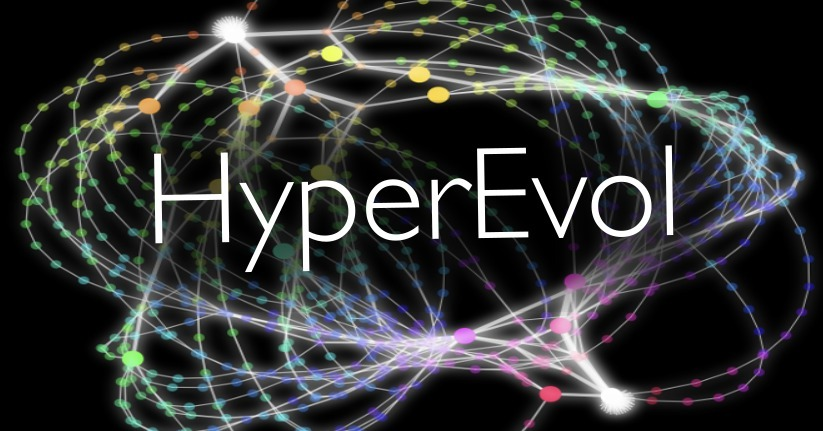
Anti-microbial resistance (AMR) involves disease-causing pathogens evolving resistance to the drugs we use to treat them. It is a huge and growing societal health burden, and we are interested in how our approaches for modelling and learning about evolution can help understand this process. Our goal is to provide both basic biological insight and clinically relevant information on particular pathogens. Our Trond Mohn-funded project HyperEvol within CAMRIA — Combatting Anti-Microbial Resistance with Interdisciplinary Approaches — aims to develop and apply inference methods to learn and predict the pathways by which AMR evolves in different regions and countries worldwide.
HyperEvol highlights include:
– Efficient, flexible “hypercubic inference” algorithms for inferring evolutionary pathways involving many coupled characters (contributing to the growing field of evolutionary accumulation modelling); [Bioinformatics 2023, PLoS CB 2024, Bioinformatics 2024]
– Using hypercubic inference to reveal the evolutionary dynamics of tuberculosis multi-drug resistance; [PLoS CB 2024, mBio 2025]
– Using hypercubic inference to reveal the “natural history” of AMR in Klebsiella pneumoniae: global diversity in evolutionary dynamics and the geographical and policy factors that shape this diversity; [biorxiv 2025]
– Newly sequenced bacterial isolates from decades of clinical study in Africa, which validate the predictions of this evolutionary modelling. [biorxiv 2025]
Plant biology

Plants feed the world, and we are interested in learning about basic plant biology beyond the bioenergetic organelles that we study in other projects. Some research highlights from our plant biology work include:
– Exploring the role of “stromules” (tubular extensions of chloroplasts) in plant cell biology; [PCP 2024]
– Running large-scale field experiments artificially enriching CO2 in a forest ecosystem to explore future climate influence on root growth; [STOTEN 2023]
– Identifying a “bet-hedging” mechanism by which plants exploit randomness to improve survival in germination; [Interface 2018]
– Identifying a distributed information-processing module in plant embryos that integrates temperature variability to induce germination; [PNAS 2017]
– Using hypercubic inference to reveal the “roadmap” by which efficient C4 photosynthesis has evolved many times in independent plant lineages; [eLife 2013]
– Using data science approaches to characterise the role of plant hormones in pathogen defence;
– Applying inference methods to solve the inverse problem in plant root growth models.
Other topics
Some other research highlights, often but not always with a biomathematical feel, include:
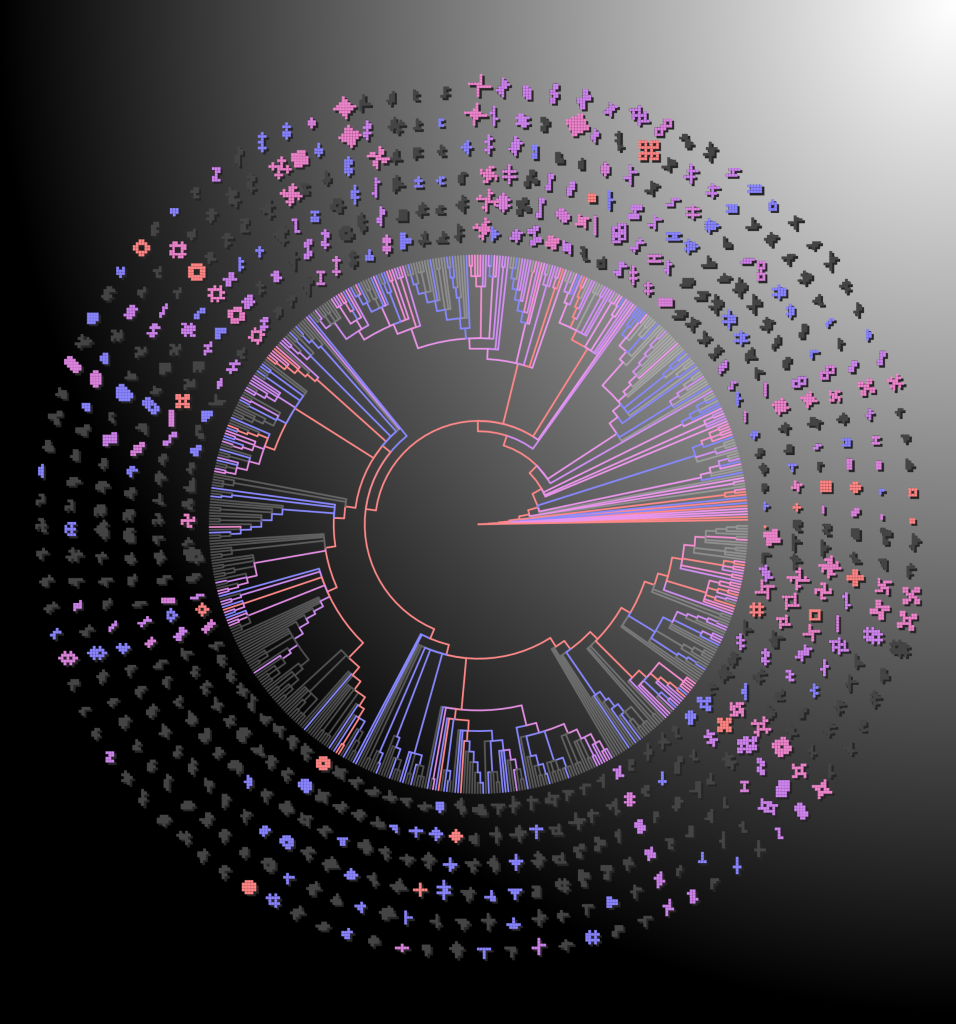
– Combining information theory, modelling, and bioinformatics to reveal evolution’s intrinsic preference for symmetric, simple structures; [PNAS 2022]
– How sea anemones grow and shrink their bodies over more than an order of magnitude in feeding and starvation; [Development 2024]
– Socio-economic covariates and public opinions linked to vaccine confidence; [eBM 2016, Lancet GH 2016]
– Possible impact of human genetic diversity on mtDNA gene therapies; [MHR 2016]
– Dynamic programming and stochastic modelling for optimal strategies in Fighting Fantasy gamebooks; [EJOR 2022]
– How ATP availability influences cell decision-making. [Sci Rep 2020]
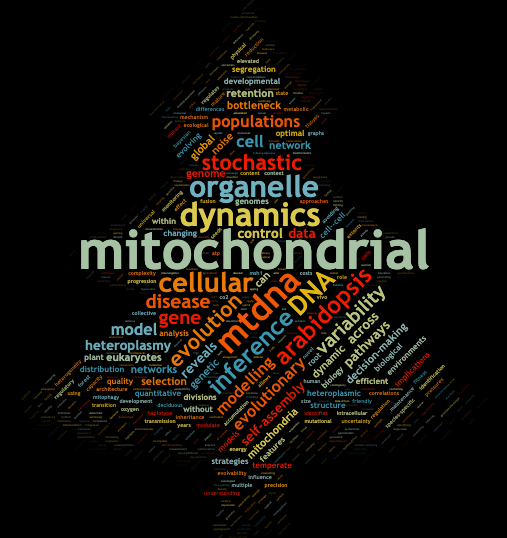
A word cloud of our paper titles, from the great tool at https://scholargoggler.com/